
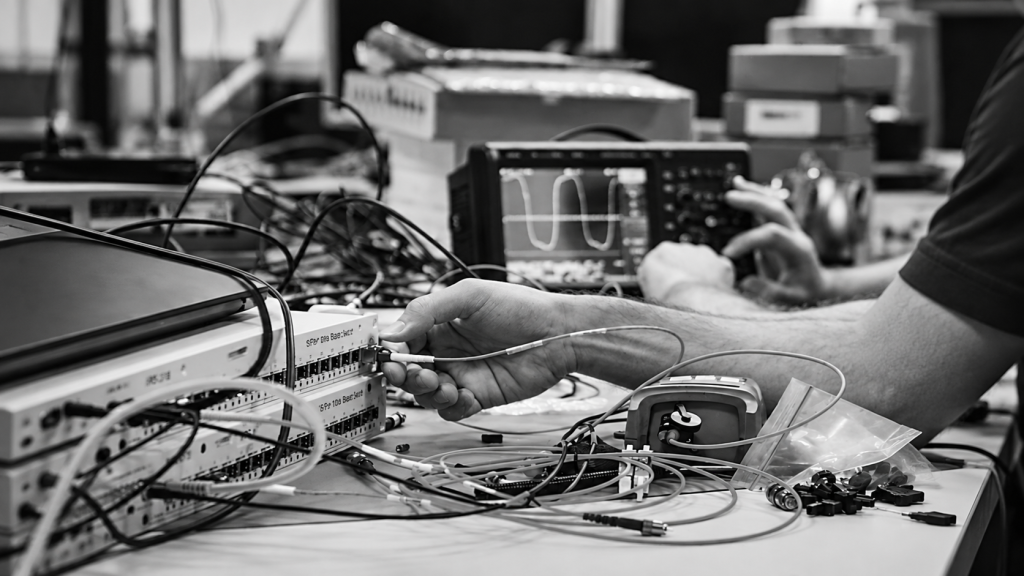
The White Rabbit Switch
Creates the network
The WR Switch allows the creation of a WR network. Starting from a reference time (such an atomic clock or GNSS receiver), the switch synchronises to an upstream source of time and acts as a source of time for downstream WR devices. The subsequent interconnection of many WR Switches allows the synchronisation of many WR devices to a common reference source of time.
The WR Switch is composed of open-source hardware (Mechanics, PCBs), gateware (HDL/FPGA), firmware (code running in dedicated processors with no operating system), software (embedded Linux including drivers and user-space tasks) and documentation (user manuals and design rationale documents).
WR Switches are commercially from various vendors.
Hardware
Along the years, different versions of the switch have been created. The latest hardware version (v.4) is expected next year in the market. Version 3 of the hardware has various variants.
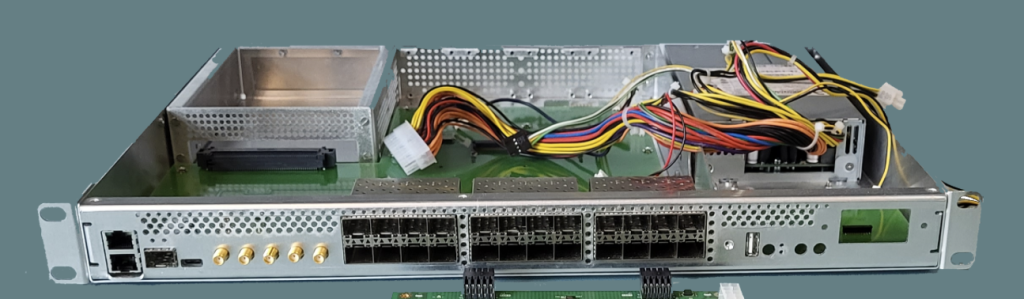
V4. WRS
Major improvements include the addition on an expansion board, to add further functionality, the possibility to have 10G WR, and swappable fans.
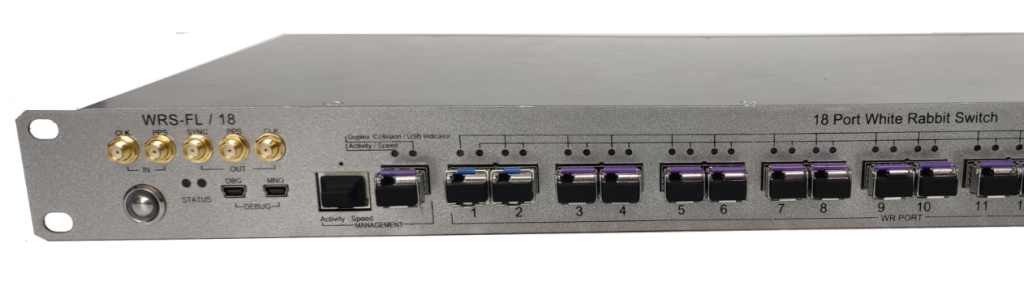
V3. Fan-Less (WRS-FL)
Optimises the layout of the SCB to improve the heat dissipation. Specifically designed for long-term service-less operation.
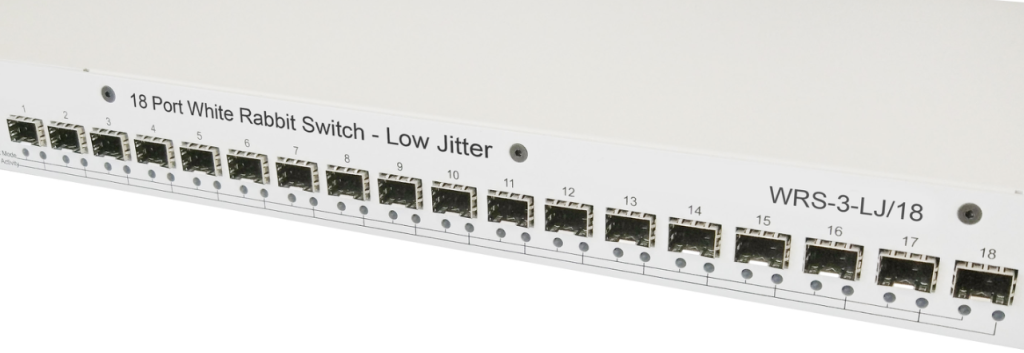
V3. Low-Jitter (WRS-LJ)
The WRS-LJ integrates the low jitter circuitry within the SCB, which has been redesigned to reduce the power consumption and improve the thermic dissipation and reliability of the device
Software and Firmware
They are maintained and regularly upgraded by the White Rabbit Collaboration Bureau. Currently the latest release of the firmware is version 8.
Among many new features and improvements, this firmware provides:
- more parameters configurable in runtime
- better ssh keys handling
- improved configuration of PTP over UDP/IP
- improved display of SFP related information
- support for NMEA/IRIG-B as a ToD source
- per-WRS-type calibration
Please note that the new firmware uses new gateware, thus provides new calibration values. Find out more by clicking below.